
Inside the Patient Decision Journey
The Prescription Drop‑Off Problem: What Marketers Should Know

Two out of three patients have chosen not to fill or refill a prescription at least once, highlighting a major challenge in medication adherence.
As the new year begins, many Americans set fresh health goals. Yet even with the desire to improve their well‑being, patients often stop taking prescribed medications earlier than recommended, sometimes without consulting a healthcare provider. In fact, two out of three patients have chosen not to fill or refill a prescription at some point. For pharmaceutical brands, understanding and supporting prescription adherence is essential to improving treatment outcomes.
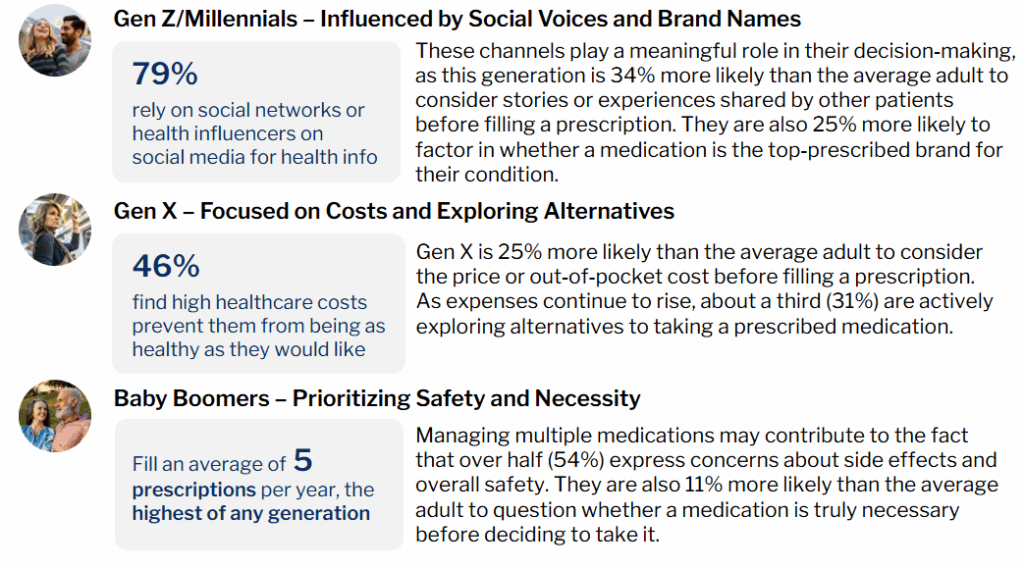
To shed light on how patients think about their medications, this article highlights insights from the 2025 MARS Consumer Health Study, focusing on individuals who filled a prescription within the last 12 months. The findings explore generational differences in what patients consider before filling a prescription, where they turn for information and support, and the reasons they may choose not to refill.
Considerations before filling a prescription
Prescription information and support needs
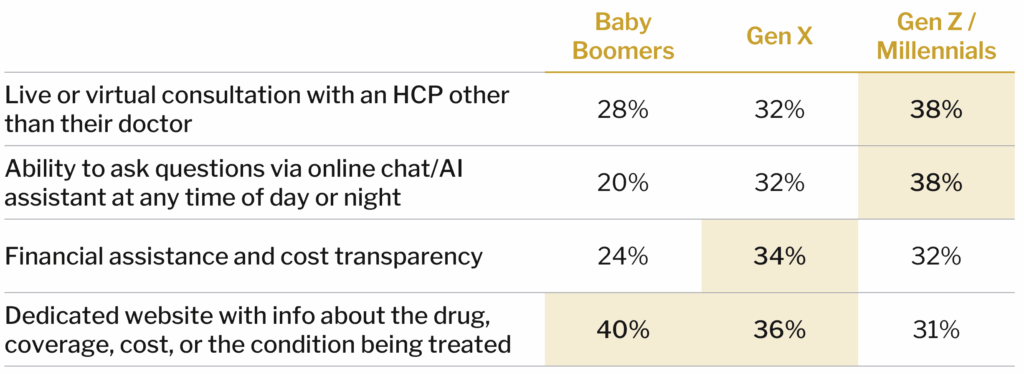
When considering emerging Rx support opportunities that pharma brands can leverage to deliver more personalized experiences, clear generational differences emerge. Younger patients gravitate toward interactive touchpoints that offer real-time connection with human, or human‑like support, such as virtual doctor consults or 24/7 online chat/AI for quick answers. Older adults prefer information that is consolidated in one place and easy to read or reference. Meanwhile, Gen X patients prioritize transparent details about costs and available financial assistance.
As patients enter the new year with health goals in mind, the 2025 MARS Consumer Health Study makes it clear that prescription adherence is shaped by diverse motivations and challenges across generations. From younger adults influenced by peer experiences and seeking social or human-like support, to Gen X patients driven by cost transparency, to Baby Boomers prioritizing safety and necessity, each group approaches medication decisions differently. For pharmaceutical brands, these distinctions underscore a critical opportunity: delivering tailored, patient‑centric resources that address the specific concerns and information needs of each generation. By aligning communication and support strategies with these preferences, brands can play a meaningful role in improving adherence and ultimately, driving better health outcomes.
Source: M3 MI’s 2025 MARS Consumer Health Study
Information
For more information on detailed study results from M3 MI, including at the specialty level, contact us at
info@M3-MI.com.