
From Information Scarcity to Support
What Rare Disease Patients Need
& How Marketers Can Help

Rare disease patients are redefining how they seek, trust, and engage with health information.
Rare diseases represents a significant and often overlooked healthcare imperative in the U.S. with tens of millions of Americans living with a rare disease (one that affects fewer than 200,000 people). Today, more than 7,000 rare diseases have been identified, yet over 90% lack an FDA‑approved treatment*. Even when treatments do exist, patients, caregivers, and physicians frequently encounter long, complex healthcare journeys marked by limited disease‑specific information. These information gaps can delay diagnosis and underscore the urgent need for personalized education and support.
Rare disease patients^ value doctors less, self‑research more
17% less likely
than avg. patients to:
Value doctors for health information
16% more likely
than avg. patients to agree:
“I research treatment options on my own and then ask my doctor about them”
Supporting rare disease patients^ where they struggle & where they engage
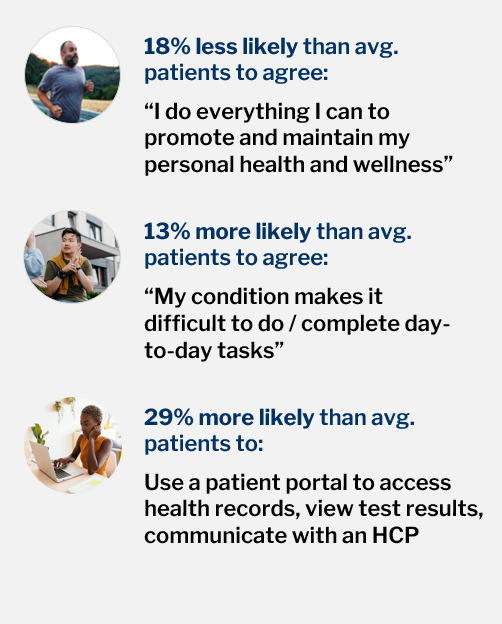
Rare disease patients often face a high daily burden that shapes how they engage. Compared with average patients, they are more likely to report difficulty completing everyday tasks and are less likely to feel they can fully promote their own health and wellness.
At the same time, these patients are significantly more engaged with digital tools, using patient portals at higher rates to access records, review results, and communicate with HCPs. Together, this points to a need for empathetic, practical support that reduces day‑to‑day strain while leveraging digital channels to deliver accessible, personalized, and ongoing care.
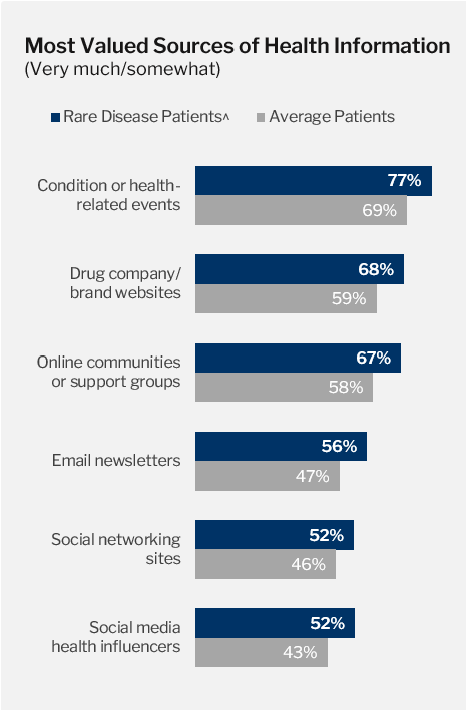
Beyond patient portals, this population places greater importance on digital, social, and peer‑driven education than the average patient. They actively seek opportunities to connect with others who share similar experiences, whether in person at disease‑related events or online through social networks, influencers, and condition‑specific communities.
This behavior underscores the need for personalized, condition‑focused messaging and reaching them in areas that are dedicated to their condition. Pharmaceutical company websites also play a role in making sure patients are educated on the latest treatment information that they will likely bring to their next doctor appointment.
Ultimately, rare disease patients need more than just access to information, they need education and support that recognize the daily burden of their condition, meets them in the digital and community spaces they already use, and respects their role as active participants in their care. Clear, condition‑specific education can help support them in navigating complex care journeys.
While these initial insights scratch the surface of understanding what rare disease patients need and how to reach them, we understand marketers’ need deeper insights to better personalize marketing plans. To meet this need, M3 MI is launching a new syndicated rare disease solution featuring dedicated studies for Patients & Caregivers and for Physicians (PCPs and Specialists). Available in Q3 2026, these studies will provide essential insights into the rare disease information journey, supporting more personalized, patient‑centric engagement while helping to close information gaps and reduce diagnostic delays.
Information
For more information on detailed study results from M3 MI, including at the specialty level, contact us at
info@M3-MI.com.